

 Español
 عربى
عربى
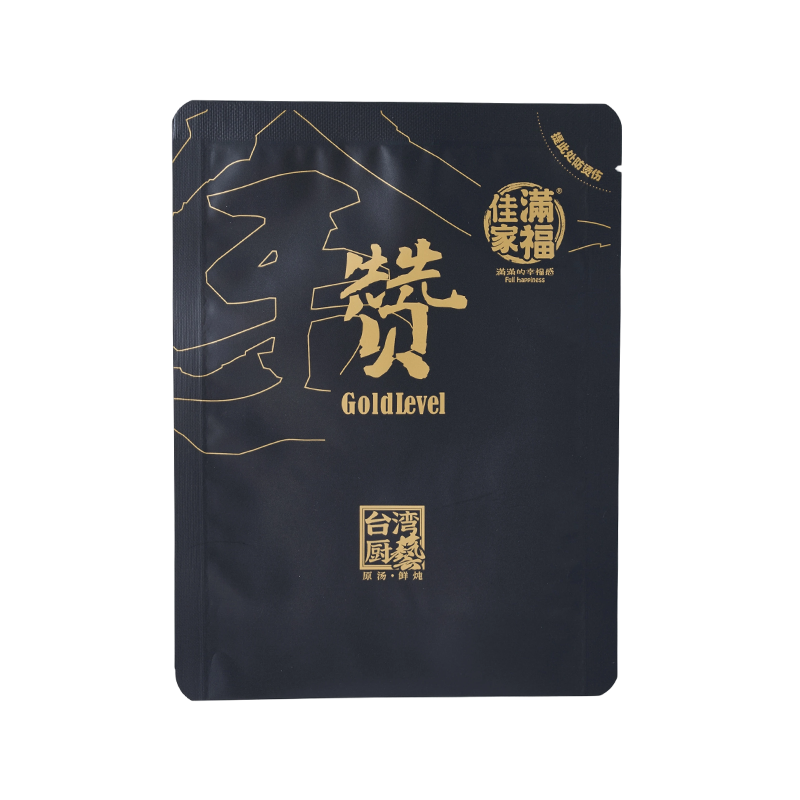
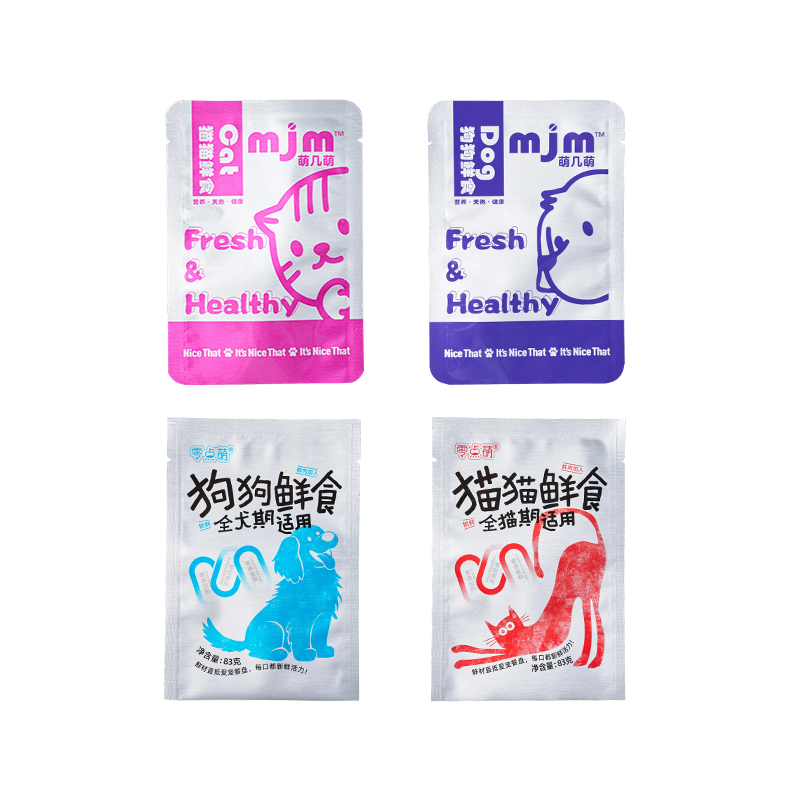
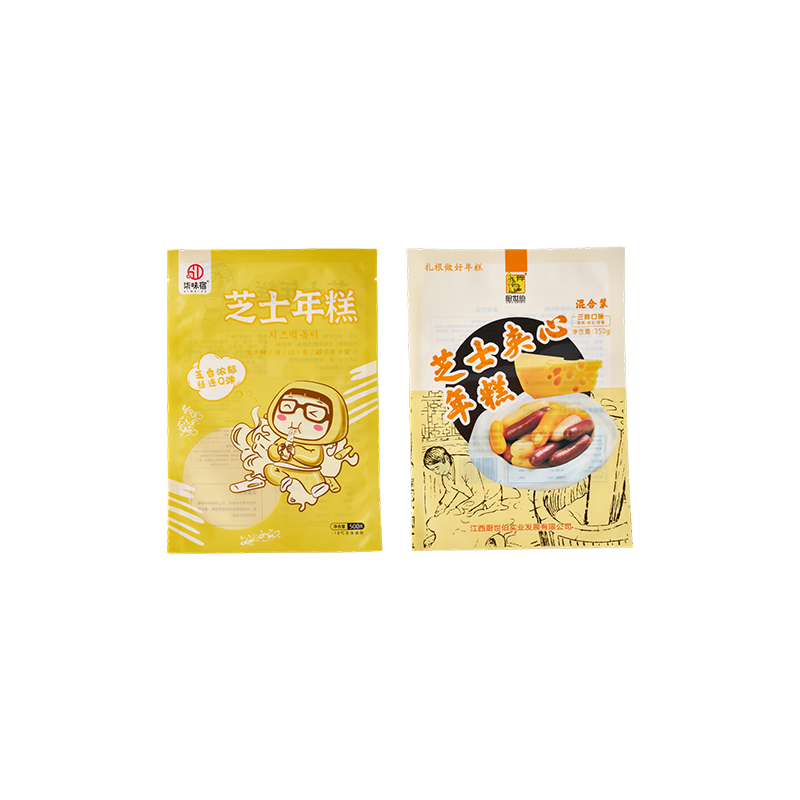
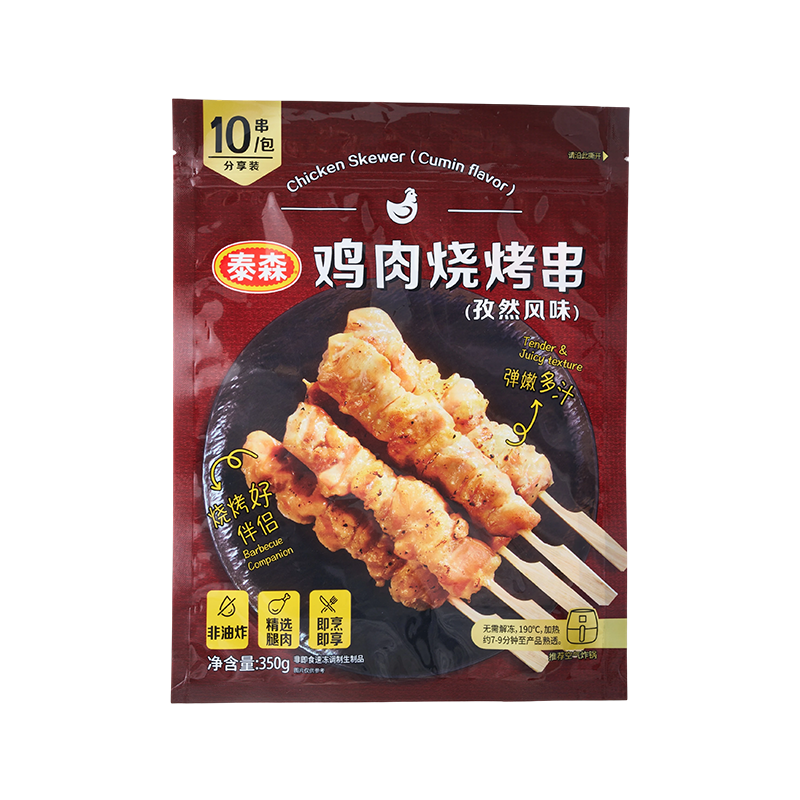
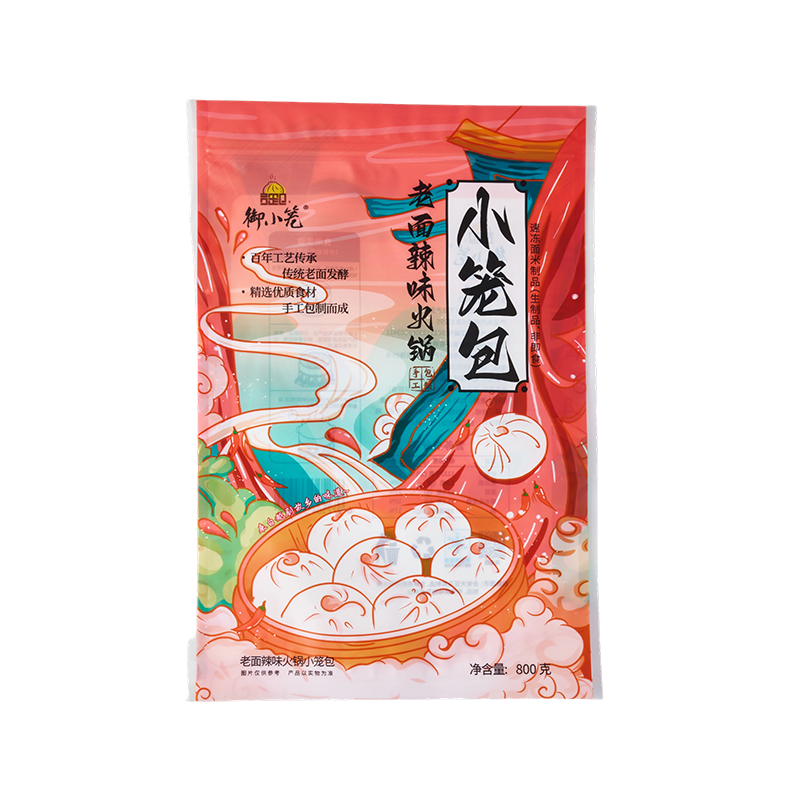
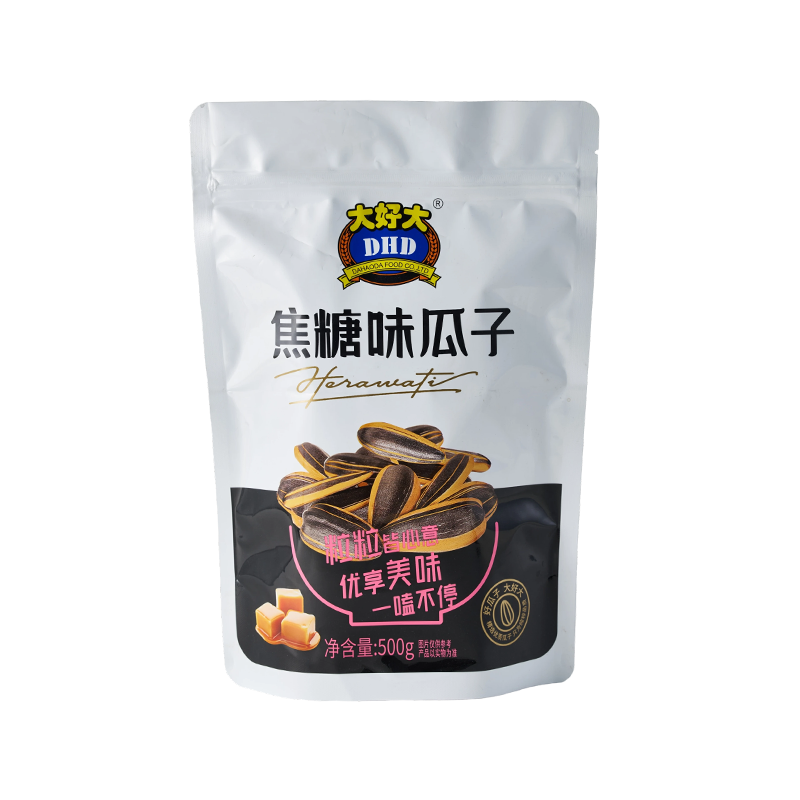
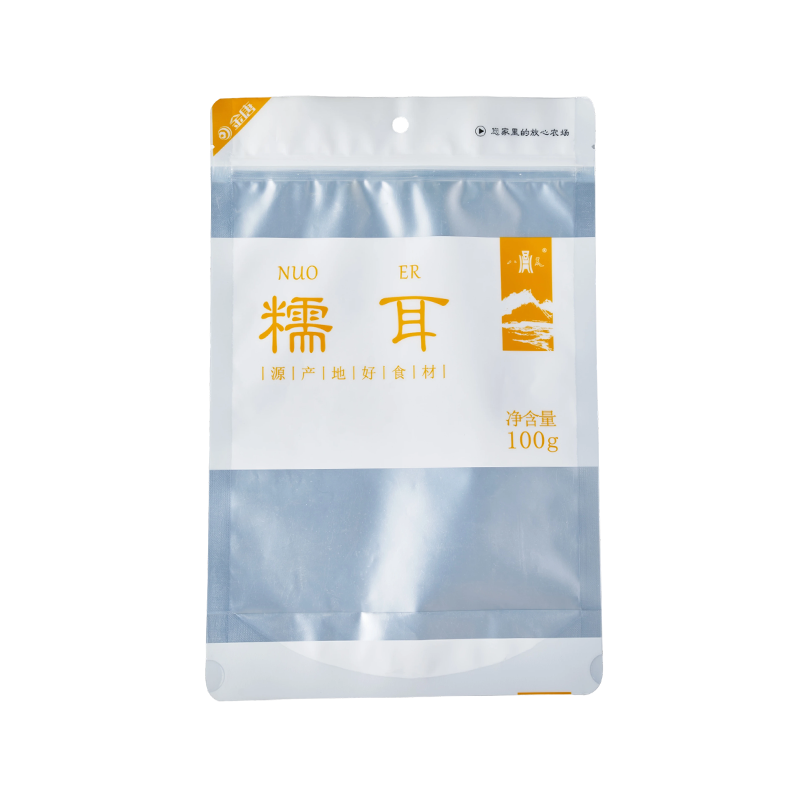
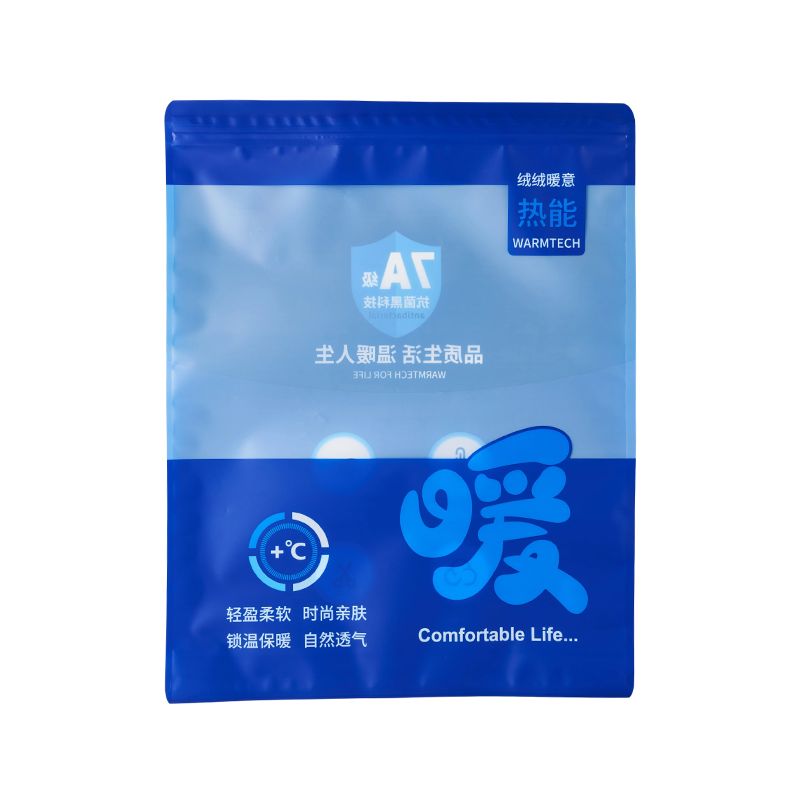
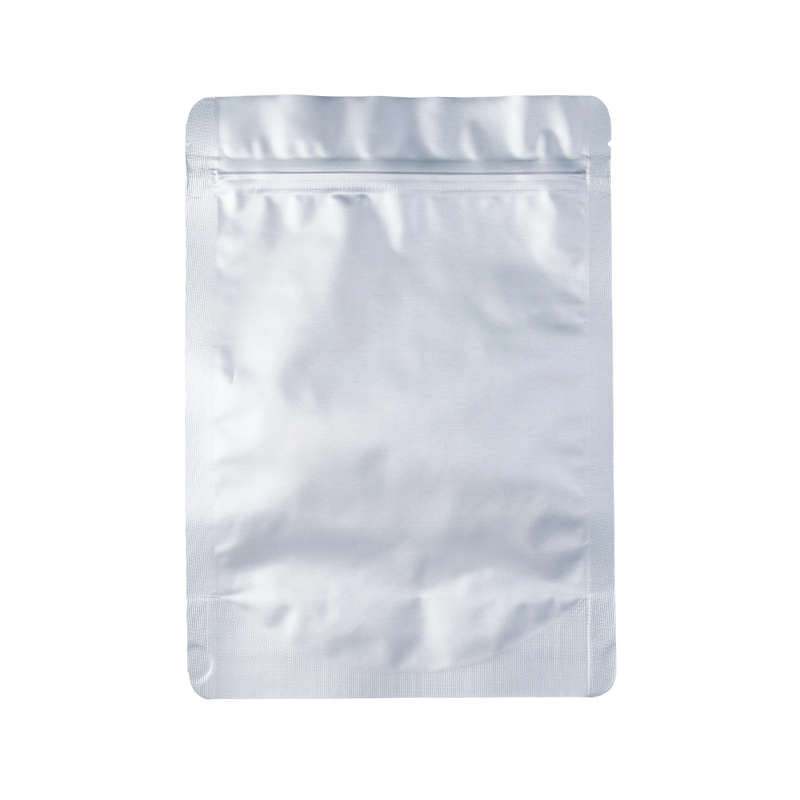
A aluminum foil retort pouch is filled, sealed, and then cooked inside a pressure vessel at 121 degrees Celsius. The foo...
READ MORE +-
 +86-13587951391
-
 [email protected]
 2nd Floor, Building B, No. 1088, Shidai Avenue, Longgang City, Wenzhou, Zhejiang Province, China.

Product Categories
-
Mid Seal Bag (12)
-
Spout Pouches (10)
-
Stand Up Bag (6)
-
Plastic Printed Film Roll (2)
-
Special-Shaped Bag (8)
-
Self-Sealing Bags (12)
-
Paper Pouches (3)
-
Aluminum Foil Retort Pouches (7)
-
Laundry Detergent Spout Pouches (2)
-
Printing Toy Packaging Bags (3)
-
Custom Meat Packaging Bags (3)
-
Face Mask Packaging Bags (1)
-
Blank Packaging Bags (7)
-
Frozen Prefabricated Food Packaging Series (5)
-
Pet Food Packaging Bags (4)
-
Wall Tile Decoration Sticker (137)
-
Kitchen Oil-Proof Stickers (78)
Recent Posts
Shenhong
We are a comprehensive manufacturing enterprise integrating flexible packaging design, printing, lamination, and bag making services.
Contact UsResealable Food Packaging Bags
Stand Up Bag is suitable for various products. Zipper available, good for shelf displaying. Its stable bottom structure allows the pouch to stand upright, enhancing product visibility and improving brand presentation. The design supports multiple filling options and is compatible with heat-sealing, making it convenient for both manual and automated packaging processes. Ideal for food, daily necessities, and promotional items.
About Us
Shen Hong Printing Co.,Ltd.
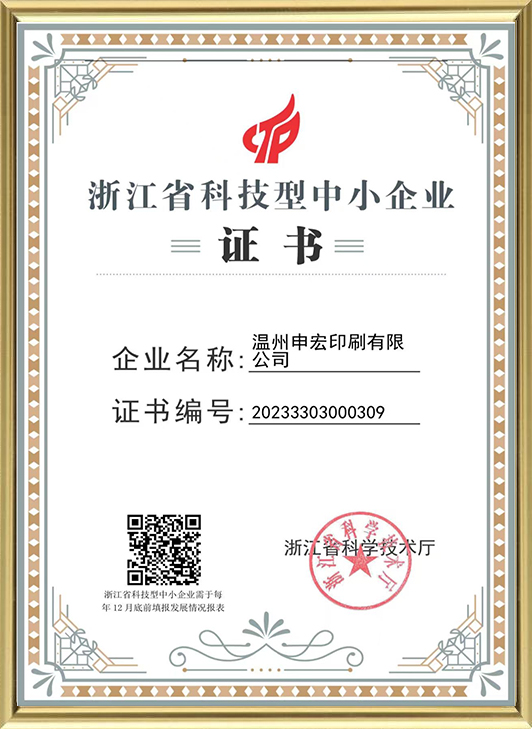
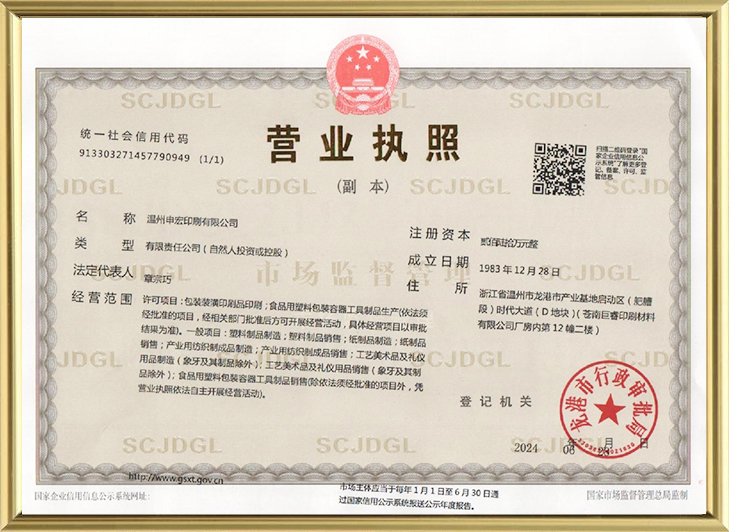
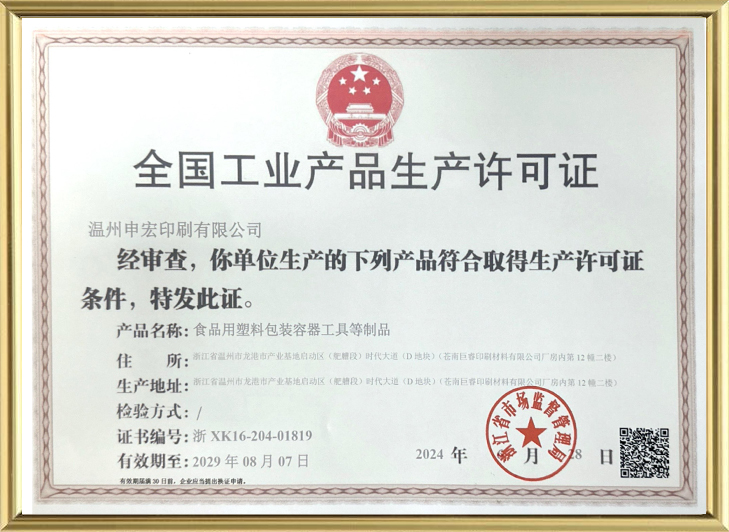
Founded in 1983, Shen Hong Printing Co., Ltd. from Wenzhou is a leading science and technology enterprise based in Zhejiang Province, China, specializing in packaging printing and flexible packaging solutions. The company integrates packaging design, packaging print, gravure printing, lamination, and precision bag manufacturing, providing customers with comprehensive, high-quality packaging solutions.
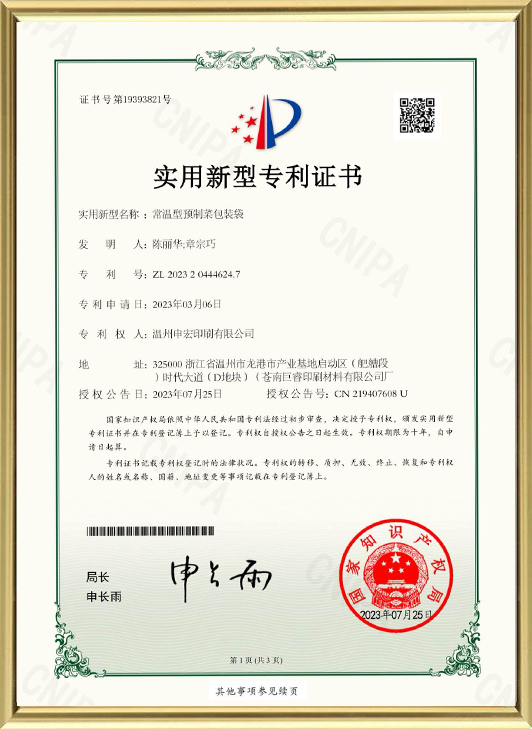
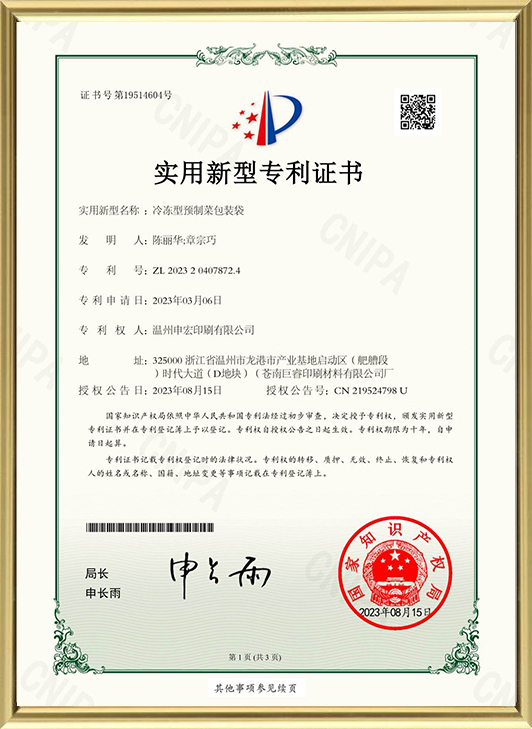
Shenhong specializes in the development and production of high-temperature retort packaging and low-temperature frozen packaging for the prepared food industry, and has obtained multiple utility model patents, demonstrating its commitment to continuous innovation.
The company operates advanced automated production equipment, including gravure printing presses, laminating machines, and bag-making lines capable of producing three-side seal, center seal, four-side seal, eight-side seal, stand-up, zipper, and other customized flexible packaging products.
Today, Shenhong's packaging printing products serve a wide range of industries, including food and beverage, daily consumer goods, agricultural chemicals, textiles, and electronics. Backed by over 40 years of manufacturing expertise, advanced technology, and strict quality control, the company continues to deliver reliable packaging print solutions to customers in both domestic and international markets.
Latest News
-
-
A bag of dog food sits in a warehouse for months before a customer opens it. The kibble inside contains fats that oxidiz...
READ MORE + -
A bag of coffee, a pouch of granola, a pack of dried fruit. These are not flat bags. They stand. The bottom gusset opens...
READ MORE + -
A bag of dog food sits on the shelf next to thirty other bags. The customer walks by, glancing. The bag has two seconds ...
READ MORE + -
A self-sealing bag has a simple mechanism: two strips of adhesive, one on each side of the opening, that press together ...
READ MORE +
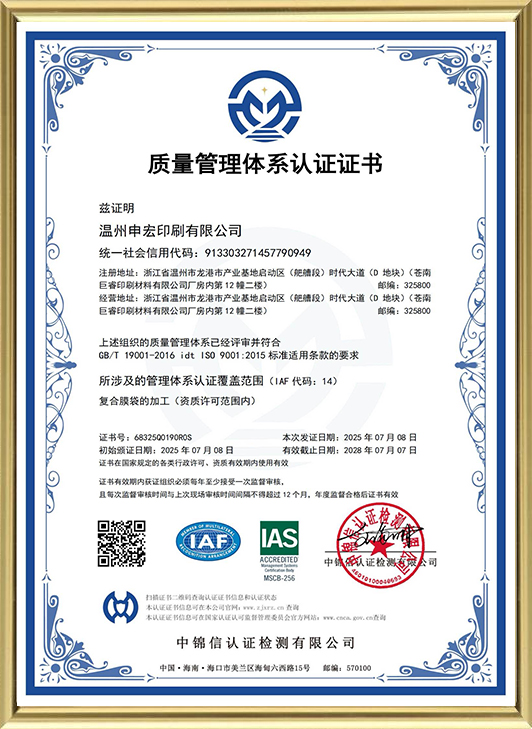
Certificate Of Honor
Message Feedback
The Reclosable Revolution: How Zipper Pouches Balance Freshness, Convenience, and E-Commerce Compatibility
How Reclosable Packaging Bags Maintain Their Seal Integrity After Repeated Opening and Closing
Defining the seal integrity challenge
Open a bag of chips, eat some, close it, and repeat this daily for a week. The seal must remain effective through each cycle. How reclosable packaging bags maintain their seal integrity after repeated opening and closing is a question of polymer science and mechanical design.
The mechanics of seal integrity
Reclosable zippers use interlocking profiles made from a flexible polymer — typically metallocene-catalyzed LLDPE. When pressed together, the profiles deform and create a tight mechanical interlock that blocks air and moisture. The effectiveness depends on the polymer's ability to recover its original shape after each closure. Over time, repeated deformation can cause the profiles to take a "set" — permanent deformation that reduces seal effectiveness.
Solutions for maintaining integrity
- Using high-grade sealant resins with superior elastic recovery
- Designing a wider interlocking profile for more contact surface
- Adding a protective ridge that guards the profiles from damage during handling
A scenario from product testing
A snack brand tested their zipper pouches for 100 open-close cycles. After 50 cycles, seal strength remained at 80 percent of the original. After 100 cycles, seal strength stayed above 65 percent — sufficient to preserve freshness. The brand confirmed the pouch would outlast the typical consumer's usage pattern.
Comparison: standard versus high-durability seals
Standard zipper seals use basic resins and narrow profiles. Seal strength drops significantly after 10–20 cycles. High-durability seals use premium resins with better recovery and wider profiles. They maintain effectiveness for 50–100 cycles. The cost premium is 10–20 percent, but the benefit is improved freshness preservation and consumer satisfaction.
How Resealable Packaging Bags Prioritize Convenience and User Experience
Defining convenience in resealable packaging
How resealable packaging bags prioritize convenience and user experience is about designing packaging that is intuitive, frustration-free, and easy to use for every consumer — regardless of age or hand strength.
Design features for convenience
- Wide tear notch or laser scoring for easy opening without tools
- Forgiving zipper that snaps together with a simple press — no precise alignment needed
- Gusseted bottom for upright stability on shelves and counters
- Clear "press here" indicators to reduce consumer guesswork
A scenario from consumer testing
A snack brand tested three zipper pouch designs. Design A had a small tear notch and narrow zipper. Design B had a large tear notch and wide zipper. Design C had a peelable seal and forgiving zipper. Design C scored highest on ease of opening, ease of closing, and overall satisfaction. The brand adopted Design C for all products.
Table: convenience features and their impact on user experience
|
Feature |
Implementation |
User Experience Benefit |
|
Wide tear notch |
Large, clearly visible notch |
Easy to find and grip; opens without struggle |
|
Peelable seal area |
Low-tack adhesive that peels cleanly |
Opens smoothly without tearing film |
|
Forgiving zipper |
Wider interlocking area |
Closes with simple press; no precise alignment needed |
|
Upright stability |
Gusseted bottom for standing display |
Bag stands open; easy access to contents |
Comparison: convenience-focused versus basic resealable bags
Basic resealable bags function adequately but may frustrate users with difficult opening or unreliable sealing. Convenience-focused bags integrate easy-tear openings, forgiving zippers, stability features, and clear instructions. The cost is typically 15–25 percent higher. The return is higher consumer satisfaction, reduced product waste, and increased repeat purchases.
Why Reliability and Freshness Preservation Are Crucial for Resealable Food Packaging Bags
Defining the stakes of failure
A resealable food packaging bag that fails to preserve freshness or does not seal reliably is more than an inconvenience — it damages the brand and the consumer's experience. Why reliability and freshness preservation are crucial for resealable food packaging bags is a matter of consumer trust and product integrity.
Freshness preservation as the primary function
The bag must block oxygen, moisture, and light from reaching the contents. Oxygen causes rancidity in nuts and oils. Moisture destroys crispness in chips. Light fades colors and accelerates oxidation. The zipper seal must maintain its barrier after repeated use. If the zipper fails, the product spoils.
Reliability as brand protection
A single failed zipper creates consumer frustration and negative brand perception. Consumers associate packaging quality with product quality. Reliable packaging builds trust and repeat purchases. Unreliable packaging drives consumers to competitors.
A scenario from consumer experience
A consumer purchased premium dried fruit. The zipper failed on the third opening — the seal would not close. The fruit became stale within days. The consumer contacted the brand and received a replacement, but switched to a competitor with more reliable packaging. The brand lost a customer over a zipper failure.
Comparison: reliable versus unreliable resealable bags
Reliable resealable bags maintain freshness and seal integrity through repeated use. Unreliable bags fail after a few cycles, leading to waste and frustration. The cost difference is 5–15 percent. The value difference is brand reputation, consumer retention, and reduced complaints.
How Food Stand Up Pouches Achieve a Transition to Sustainability
Defining the sustainability transition
Food stand-up pouches have traditionally been multi-material laminates — PET, foil, and PE — that are difficult to recycle. How food stand-up pouches achieve a transition to sustainability is a shift toward mono-material structures and renewable feedstocks.
Material replacement approach
The primary approach is replacing multi-material laminates with mono-material PE structures. Advanced high barrier PE resins and SiOx coatings now achieve the oxygen and moisture barrier previously requiring EVOH or foil layers. Mono-material PE structures are recyclable through store-drop-off programs.
Structural design considerations
- Gusseted bottom must be redesigned for mono-material film without compromising stability
- Heat seals must be validated for the new material
- Stand-up function must be maintained through testing
A scenario from sustainability transition
A premium snack brand transitioned from PET/foil/PE to mono-material PE with a SiOx coating. The pouch passed all barrier and durability tests. The transition reduced carbon footprint by 30 percent. The brand added "Recycle at store drop-off" labeling.
Comparison: traditional versus sustainable stand-up pouches
Traditional stand-up pouches offer excellent barrier but are non-recyclable. Sustainable mono-material PE pouches offer comparable performance and are recyclable. Cost is 10–20 percent higher for sustainable options. The environmental benefit justifies the premium for brands with sustainability commitments.
Why Stand Up Zipper Pouches Are Highly Compatible with E-Commerce and Retail Channels
Defining dual-channel compatibility
Stand-up zipper pouches serve both retail shelves and e-commerce fulfillment. Why stand-up zipper pouches are highly compatible with e-commerce and retail channels is a combination of structural strength, shelf appeal, and lightweighting.
Advantages for each channel
- For e-commerce: gusseted bottom and multi-layer construction provide strength to survive drops and compression during shipping
- For retail: upright position creates visibility; printed surface maximizes branding; compact shape saves shelf space
- For both: lightweight nature reduces shipping costs and stocking labor
A scenario from dual-channel use
A snack brand selling through both retailers and Amazon chose stand-up zipper pouches for all products. The pouches performed equally well in both channels — stable on shelves, durable in shipping. The brand avoided the complexity and cost of maintaining separate packaging for each channel.
Comparison: stand-up zipper pouches versus alternative packaging
Boxes and jars offer high strength but are heavier, bulkier, and more expensive. Flat bags are lighter and cheaper but lack shelf presence. Stand-up zipper pouches combine shelf appeal with shipping durability at moderate cost. The versatility makes them the preferred choice for brands serving multiple channels.
How Zipper Snack Packaging Pouches Enhance Barrier Performance
Defining the barrier enhancement need
Snack products require protection from oxygen, moisture, and light to maintain freshness and crispness. How zipper snack packaging pouches enhance barrier performance is achieved through material selection and coating technologies.
Enhancement approaches
- Adding an EVOH layer for exceptional oxygen barrier (OTR below 1 cm³/m²/day)
- Adding a nylon layer for puncture resistance to protect barrier integrity
- Applying SiOx or AlOx transparent coatings for barrier without added thickness
A scenario from barrier enhancement
A nut brand wanted to extend shelf life from 6 to 12 months. The supplier upgraded from a standard PE pouch to a PE/EVOH/PE structure with a SiOx coating. The pouch passed 12-month testing. Cost increased 15 percent. Extended shelf life allowed expanded distribution.
Table: barrier enhancement options and their impact
|
Enhancement |
Implementation |
Barrier Improvement |
Recyclability Impact |
|
EVOH layer |
5–10 micron EVOH in multi-layer structure |
OTR below 1 cm³/m²/day |
Reduces recyclability (multi-layer) |
|
Nylon layer |
Nylon layer for puncture resistance |
Protects barrier integrity |
Reduces recyclability (multi-layer) |
|
SiOx/AlOx coating |
Vacuum-deposited transparent coating |
Comparable to EVOH barrier |
Compatible with mono-material recycling |
Comparison: standard versus enhanced barrier pouches
Standard pouches provide 6–9 months shelf life. Enhanced barrier pouches with EVOH or SiOx provide 12–24 months shelf life. Cost increases 15–30 percent for enhanced barrier. The value is extended distribution, reduced waste, and premium positioning.
FAQ
Q1: How many times can a zipper pouch be opened and closed?
Standard zipper pouches maintain effectiveness for 10–20 cycles. Premium high-performance zippers maintain effectiveness for 50–100 cycles. Check supplier specifications for cycle testing data.
Q2: Are stand-up zipper pouches recyclable?
Mono-material PE stand-up zipper pouches are recyclable through store-drop-off film recycling. Multi-material pouches with EVOH, nylon, or foil are not recyclable. Look for "Recycle at store drop-off" logos.
Q3: What is the best barrier for snack pouches?
For 6–9 months shelf life, standard PE is sufficient. For 12–18 months, EVOH or SiOx coating is recommended. For 24+ months, combine EVOH with additional barrier layers.
Q4: Do barrier enhancements affect zipper seal performance?
Barrier enhancements may affect seal performance if the seal layer material is altered. Always validate seal strength after any material change. Test seal integrity at the expected operating temperature range.
Q5: How do I choose between retail and e-commerce packaging?
Choose packaging that performs well in both channels if possible. Stand-up zipper pouches with strong seals and durable films serve both retail and e-commerce effectively. For e-commerce-only products, prioritize durability and lightweighting. For retail-only products, prioritize branding and shelf appeal.
Contact
- ADD:
2nd Floor, Building B, No. 1088, Shidai Avenue, Longgang City, Wenzhou, Zhejiang Province, China.
- Mobile Phone:
+86-13587951391
- Tel:
+86-577-64465999
- Email:
Stay In Touch
Copyright © Shen Hong Printing Co.,Ltd.
All Rights Reserved.
